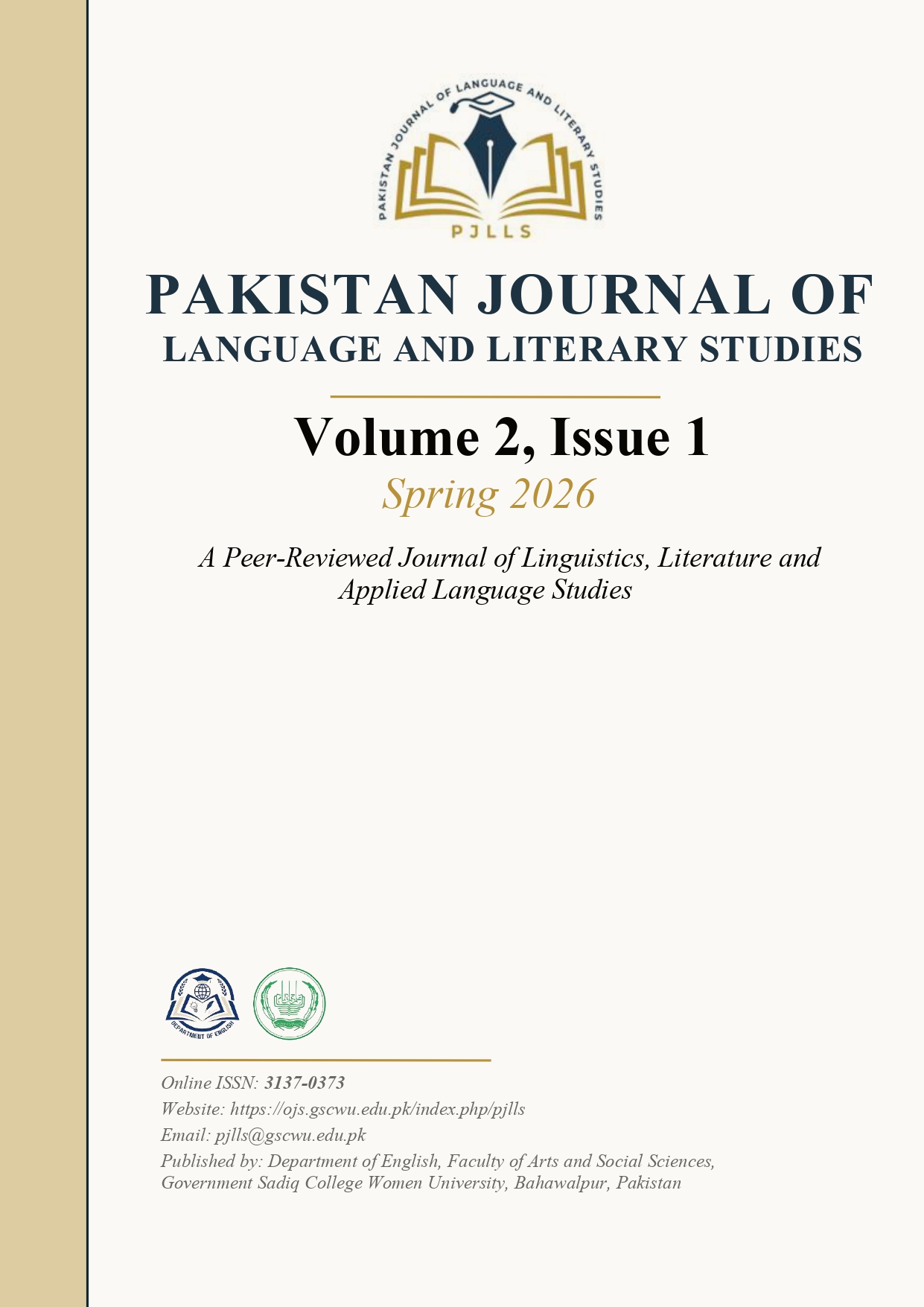
The Role of Interactional Metadiscourse Markers in Portraying Female Identity: A Corpus-Based Study of Fantasy TV Characters
Keywords:
Spoken Interactional Metadiscourse; Female Identity; Corpus-Based Analysis; Fantasy Television; Scripted SpeechAbstract
Human identity is constructed and expressed through language. This can be seen in the television industry through observations of female characters. Dialogue of female characters is crafted carefully to express their thoughts, emotions, and behaviors, providing a glimpse
into their psyche. This study analyzed interactional metadiscourse (hedges, boosters, attitude markers, self-mentions, engagement markers) utilized by five female characters in Sci-Fi and fantasy television: Wednesday Addams, Wanda Maximoff, Lyra Belacqua, Ellie, and Eleven. This study employed Hyland's (2005) metadiscourse model and took a corpus-based approach, using AntConc to analyze a data set of 43 television episodes, totaling 69,908 tokens, and employing a sequential mixed-method research approach. Frequency data were compared and reported per 1,000 tokens for each of the female characters. The results showed that self-mentions were the most frequent metadiscourse marker for three of the five female television characters, with engagement markers ranking first for the remaining two. The results further showed the television character’s emotional histories and personality traits by the presence or absence of hedges and boosters. This study posited that different and psychologically elaborate female characters were portrayed through interactional metadiscourse; this study advanced the field of metadiscourse by applying the concept to television dialogue and offered insights into the representation of female identity in contemporary popular culture.
Downloads
Published
Issue
Section
License
Copyright (c) 2026 Pakistan Journal of Language and Literary Studies

This work is licensed under a Creative Commons Attribution-NonCommercial 4.0 International License.
Articles are published under the Creative Commons Attribution-NonCommercial 4.0 International License. Anyone may share and adapt the work for non-commercial purposes, provided appropriate credit is given to the author(s) and the journal.